
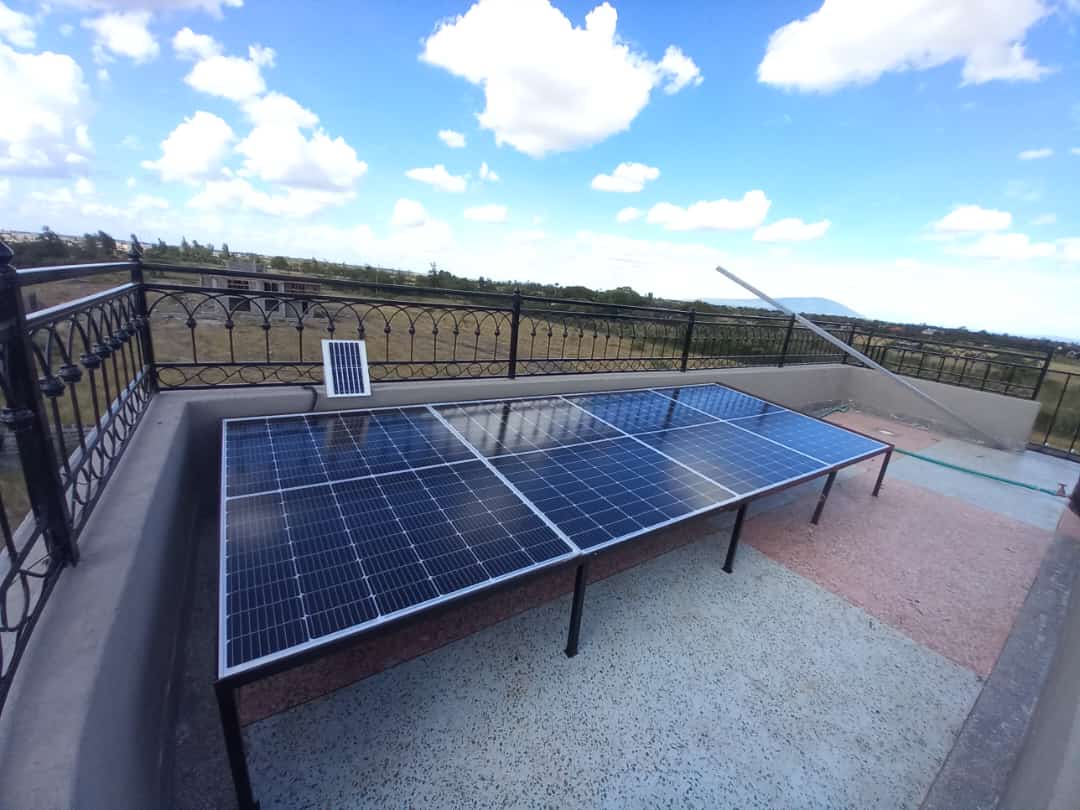
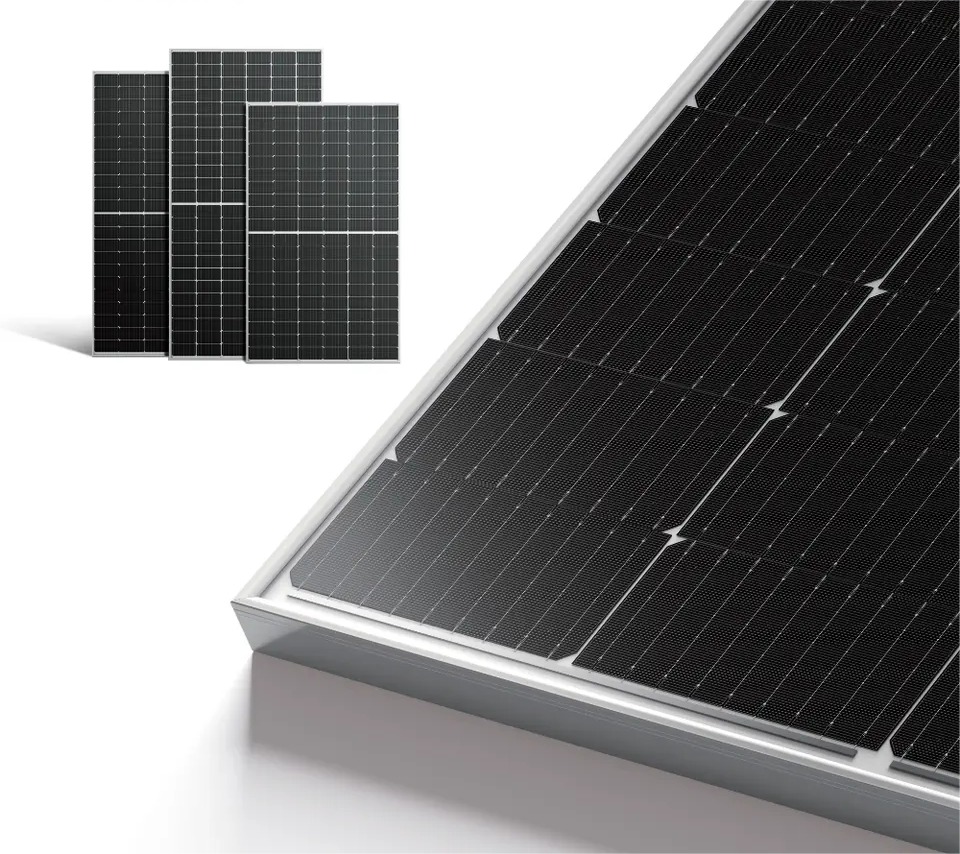

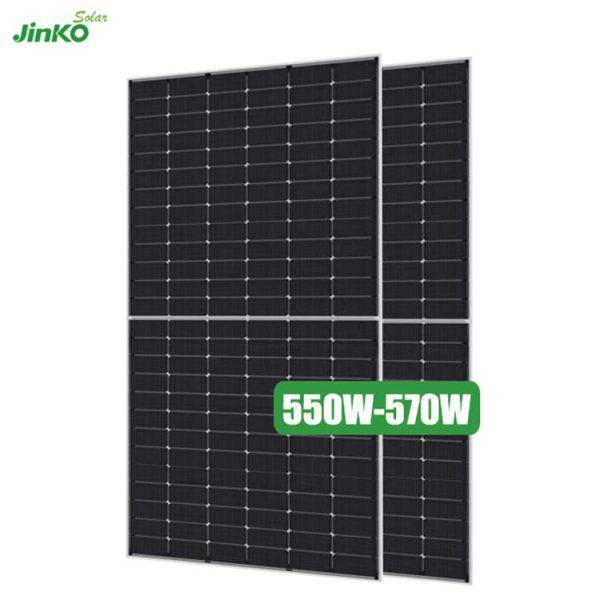
Description
Key Takeaways
-
Solar panel parallel connection helps to increase current while keeping the voltage the same.
-
It is the best choice for houses and shops that need more power without changing voltage.
-
Many brands offer panels for parallel connection such as Canadian Solar, Jinko Solar, and Trina Solar.
-
Prices range between Sh. 8,000 and 9,000 for a 300W to 400W panel.
-
A datasheet shows that parallel connection gives better performance when more current is needed.
-
You can buy from trusted suppliers like Water Equation & Solar System Ltd.
What is Solar Panel Parallel Connection?
A solar panel parallel connection is a way of joining two or more solar panels. In this method, the positive ends of the panels are joined together, and the negative ends are also joined together. This setup makes the current (amps) increase while the voltage stays the same. For example, if two 12V panels are connected in parallel, the system voltage will still be 12V, but the current will double.
This method is helpful for homes, schools, and businesses that want more energy but do not want to increase the system voltage.
How Solar Panel Parallel Connection Works
-
Voltage stays constant: If your panel is 12V, even after parallel connection it remains 12V.
-
Current increases: Two 12V 5A panels will give you 10A in parallel.
-
Power adds up: The wattage of the panels is combined. For example, two 100W panels make 200W.
This makes the solar panel parallel connection very useful when charging batteries that need fixed voltage.
Types of Solar Panels for Parallel Connection
-
Monocrystalline Panels
-
High efficiency, long life, good for small spaces.
-
Brands: Jinko Solar, Canadian Solar.
-
Price: Sh. 7,000–8,000 per 350W panel.
-
-
Polycrystalline Panels
-
Lower cost, average efficiency, bigger size.
-
Brands: Trina Solar, JA Solar.
-
Price: Sh. 7,000–9,000 per 300W panel.
-
-
Thin-Film Panels
-
Flexible and lightweight, but less efficient.
-
Brands: First Solar.
-
Price: Sh. 3,000–4,000 per 100W panel.
-
Performance Curves and Datasheet Example
When looking at solar panel datasheets, check the current (I) and voltage (V) curve:
-
A 12V 100W panel gives about 5.5A at full sunlight.
-
In parallel connection, two panels will give 11A but still at 12V.
-
This means faster battery charging and more energy stored.
Sample datasheet values for a 300W polycrystalline panel:
-
Maximum Power (Pmax): 300W
-
Voltage at Pmax (Vmp): 30V
-
Current at Pmax (Imp): 10A
-
Open Circuit Voltage (Voc): 37V
-
Short Circuit Current (Isc): 10.5A
With three such panels in parallel, current rises to 30A, but voltage remains at 30V.
Advantages of Solar Panel Parallel Connection
-
Best for off-grid homes that need stable voltage.
-
Safer for batteries because voltage is not too high.
-
Easy to add more panels later.
-
Works well in places with partial shading.
Disadvantages of Solar Panel Parallel Connection
-
Needs thicker wires because of high current.
-
Larger fuse and breaker sizes required.
-
Not always best for very big systems.
Brands and Prices for Parallel Setup
-
Canadian Solar 350W Mono – Sh. 9,000
-
Jinko Solar 400W Mono – Sh. 10,00
-
Trina Solar 330W Poly – Sh. 9,00
-
JA Solar 320W Poly – Sh. 9,000
Most of these panels are ready for parallel connection and come with MC4 connectors.
Where to Buy
You can buy quality panels and accessories for solar panel parallel connection from Water Equation & Solar System Ltd, a trusted supplier that offers panels, batteries, charge controllers, and installation services.
Final Thoughts
A solar panel parallel connection is the best method when you want more current without raising the voltage. It helps homes and businesses get reliable and safe solar energy. By choosing the right type of panel, checking datasheets, and buying from a trusted supplier like Water Equation & Solar System Ltd, you can build a strong solar system.


Reviews
There are no reviews yet.